
Concept preparation · ESI
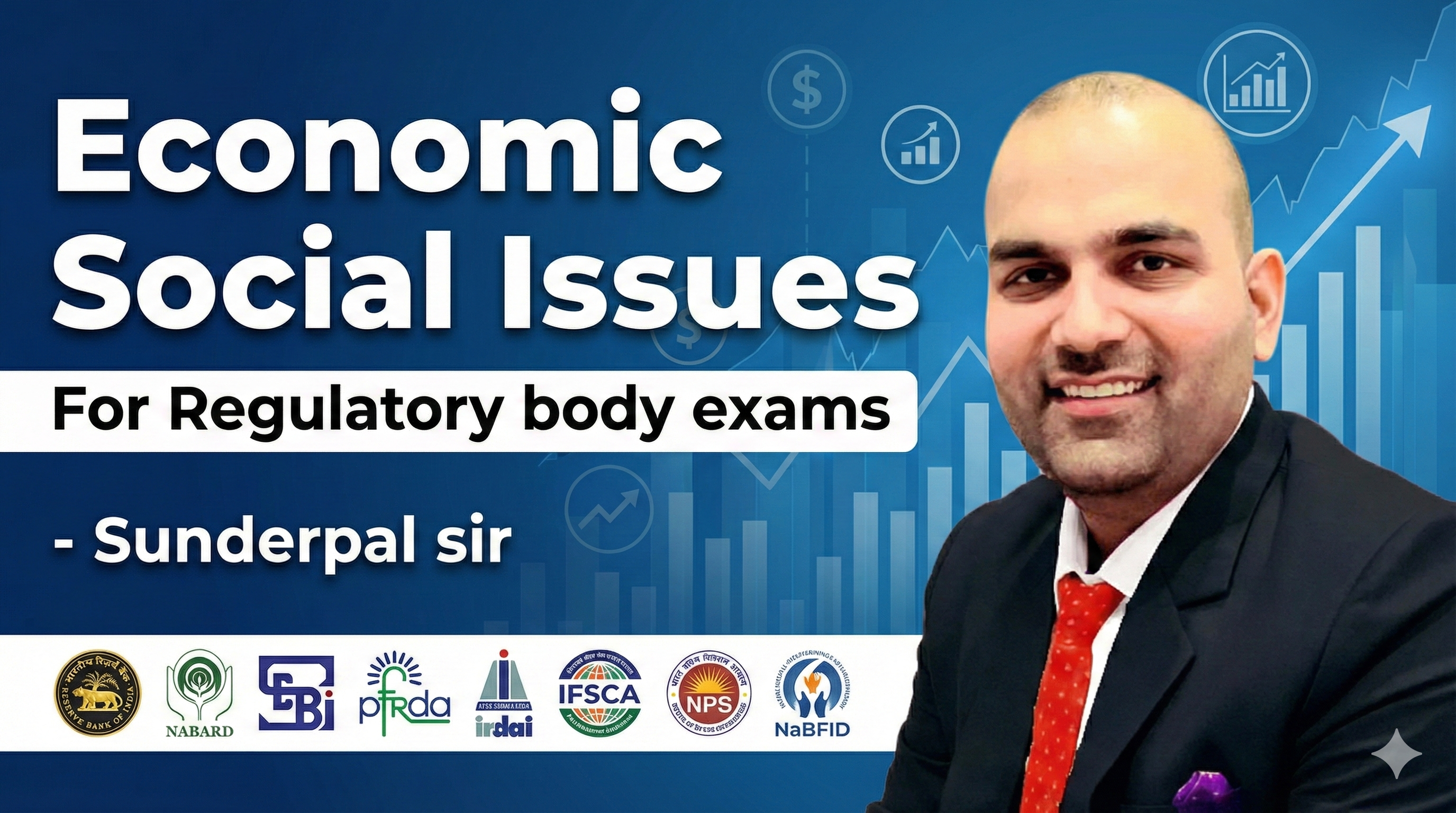
Economic & Social Issues (ESI) Course
Explore the ESI course listing and plan concept-led revision of economic and social issues. Find related finance, schemes and current-affairs resources.
Best suited to: Learners seeking an Economic & Social Issues resource who want to compare the actual available modules before enrolling.
- Subject
- Economic & Social Issues
- Course
- ESI
- Preparation
- Concepts + revision
Check current course content, fee, language and validity before enrollment.
Build understanding. Practise with purpose.
Organise Economic & Social Issues through cause, effect and policy response. Link each issue to its underlying concepts before adding examples, reports and current developments.
Course / resource details
Explore the ESI course content in the app to select the modules you need. The topic plan below is a revision guide, not a claim that every topic or format is included. Inspect the course content in the app for exact inclusions.
Try this learning task
Choose an economic or social issue. Prepare a short note with the problem, causes, consequences, policy response and the indicators used to discuss progress.
Your learning and revision focus
Use these focus areas to organise your preparation. The app content list shows the exact modules included in this package.
FOCUS 01
Economic foundations
Make concise notes connecting development, growth and the economic issues you study.
FOCUS 02
Social issues and policy
Organise each issue by context, policy response and the indicators used to evaluate it.
FOCUS 03
Current-affairs connections
Attach relevant reports and scheme updates to the underlying topic for easier revision.
A repeatable study → practice → review cycle
STEP 01
Understand
Revise the relevant concept and explain it without reading the note. Connect it to a short example before you begin practice.
STEP 02
Apply
Use your examination syllabus as a checklist. Read a topic, explain its central issue in your own words, and connect it to a relevant report or policy example.
STEP 03
Review
Record what went wrong, why the correct answer works and the next revision action. Revisit uncertain correct answers as well as mistakes.
Collecting facts without a structure for recalling them
Use one consistent topic framework. Add evidence only where it explains the issue and helps distinguish it from a related topic.
Choose the resource that fits your preparation
Check the actual lessons, notes and practice available in the course.
Compare the modules with your examination or learning objective.
Open any sample lesson or resource made available by the app.
Review the current fee, language and validity before enrollment.
Continue your learning with the right resources
Use the links below to connect concept learning, revision and practice. Choose the format that addresses your next learning need.
EXAM PREPP · FACULTY & LEARNING SUPPORT
Learn with Sunderpal Dahiya Sir
Banking and finance educator with 10+ years of teaching experience. Prepare through concept clarity, regular question practice and focused revision.
Explore free classes on YouTube, meet your mentor or ask for help choosing a course. Package-specific mentorship and doubt support follow the selected app listing.
Frequently asked questions
Does this page confirm a complete ESI syllabus package?
The app description does not specify complete module coverage. Compare the available modules with your official syllabus before enrolling.
Are videos, notes and tests confirmed for this listing?
The public description does not specify those formats. Open the course content in the app to check what is available.
What is a useful way to revise ESI?
Use a cause–effect–policy framework, then add a relevant example or indicator and test your recall.
Which related resources can support ESI preparation?
The linked government-schemes, current-affairs and finance pages can help connect policy developments with the underlying concepts.
Make your next study session count
Organise Economic & Social Issues through cause, effect and policy response. Link each issue to its underlying concepts before adding examples, reports and current developments.