

If you want a systematic banking qualification instead of a collection of disconnected study resources, DBF is a useful option to explore for your next step.
DBF can give your preparation a defined subject framework and a reason to study with depth. Its structured syllabus and courseware can help you develop concepts in sequence, while guided teaching and reviewed practice help you work through difficult areas.
How DBF Can Help You
- Study with direction: organise learning around defined subjects.
- Develop deeper understanding: connect explanations, examples and questions.
- Build disciplined preparation: use an error log and revision routine to improve consistently.
What This Can Add to Your Career
A structured qualification can help you demonstrate purposeful learning. Use the study method below to turn academic rigor into stronger understanding, then use Exam Prepp classes for explanation and guidance where you need support.
Build a structured DBF preparation routine with Exam Prepp
Take the next step with the DBF May 2027 course on the Exam Prepp app. Use structured classes, subject practice, revision and mentorship to turn your interest into a preparation routine. Explore the current course details and choose the support that fits your goal.
For personal guidance, contact Sunderpal Dahiya Sir through direct call or WhatsApp. Share your background and target so the discussion can focus on your study needs.
In This Article
- How this qualification can help you
- What this adds to your career
- What Rigor Should Mean in Your Study Routine
- Use Courseware as a Structure for Learning
- A Five-Step Method for Each Topic
- Example: Review a Mistake Properly
- Choose Support That Encourages Depth
- Prepare for the Examination Without Narrowing the Learning
- Frequently Asked Questions
What Rigor Should Mean in Your Study Routine
For a learner, rigor means checking whether an explanation is correct, whether you understand the assumptions and whether you can answer a changed question. It does not mean using complicated words or making notes that are too long to revise.
- Explain the concept without looking at a page.
- Give one fictional example.
- Identify a limitation or a condition.
- Attempt a question that changes the original situation.
Use these as self-checks. They reveal whether your knowledge is flexible or tied to one memorised phrase.
Use Courseware as a Structure for Learning
IIBF’s published guidance advises using its courseware alongside relevant updates. A book gives you an organised base, but dynamic information needs to be checked for the applicable examination period.
Create a topic checklist and record where each item is covered. Keep your own notes concise: a definition, a short explanation, a simple example and common mistakes. Separate timeless concepts from figures, rules or details that may change.
A Five-Step Method for Each Topic
| Step | Action | Evidence of progress |
|---|---|---|
| Read | Study a manageable section carefully. | Identify its central idea. |
| Explain | Restate it in your own words. | Produce a short, coherent explanation. |
| Apply | Use a fictional example. | Connect the idea to a situation. |
| Test | Attempt related questions. | Recognise whether you can handle variation. |
| Review | Explain each error and correct it. | Reduce repeated mistakes. |
The sequence is a suggested method, not an official teaching schedule. Adjust the amount of reading to the difficulty and the time available. Complete the cycle before moving through large numbers of topics.
Example: Review a Mistake Properly
Suppose you chose an answer because a familiar keyword appeared in the question. On review, you discover that an important condition changed the meaning. Do not simply copy the correct option into your notes.
- Write why you selected the wrong option.
- Identify the overlooked condition.
- Explain why the correct answer follows.
- Create a similar question with one changed detail.
- Reattempt the topic after a gap.
This process turns a wrong answer into useful feedback. The aim is to improve reasoning rather than protect a high practice score.
Choose Support That Encourages Depth
A helpful class should make the idea clearer and give you a way to check understanding. Look for explanations, worked examples and opportunities to ask specific questions. Practise independently after the lesson rather than assuming the teacher’s clarity means you already understand.
A better doubt question
“I can follow the first step, but I do not understand why this condition changes the conclusion. Could you explain the reasoning with another example?”
Specific doubts make guidance more effective and reveal exactly where your learning needs attention.
Prepare for the Examination Without Narrowing the Learning
Use the current syllabus, examination rules and appropriate practice. Keep a revision schedule and leave time to revisit weaker areas. Avoid attempting to complete a demanding topic only by reading a last-minute summary.
The purpose of structured courseware is best served when you combine it with active study. Your goal should be both a sound examination attempt and knowledge you can explain later in a career discussion. Keep evidence of progress through reviewed practice, not just completed video counts.
Frequently Asked Questions
Does rigor mean the course is impossible for beginners?
No. Build the basics, use manageable sections and practise consistently.
Are summaries enough?
Use them for revision after developing understanding, not as the only learning method.
What should I record after a mistake?
The cause, overlooked condition, correct reasoning and next review date.
Can classes replace independent practice?
No. Test whether you can explain and apply the idea yourself.
Learn DBF with Exam Prepp
Bring structure to your preparation with the DBF May 2027 course on the Exam Prepp app. Explore support for all four papers through recorded classes, PDFs, quizzes, chapter-wise MCQs, test series and mentorship, with live doubt sessions when required. Course content is in English, with teaching explanations in Hinglish. Check the current course listing for access, schedule, fees and inclusions before enrolling.
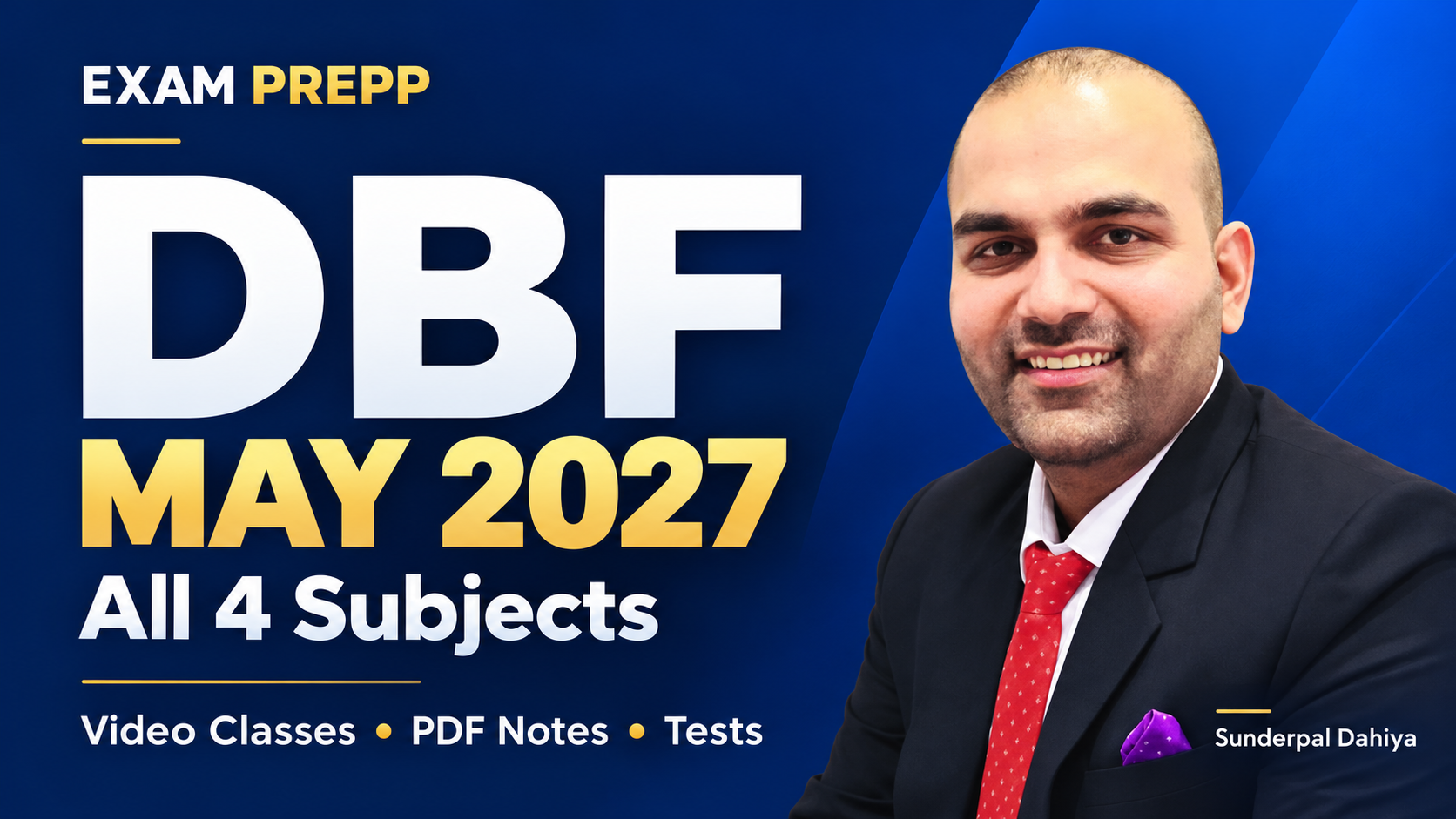 Explore DBF ClassesAsk on WhatsAppJoin the DBF Telegram Group
Guidance from Sunderpal Dahiya Sir
Study with guidance from Sunderpal Dahiya Sir, with more than 10 years of teaching experience. Use mentorship to identify weak concepts, review mistakes and plan a manageable study routine. For course guidance, contact Exam Prepp by call or WhatsApp at 8800528912.
For learning updates, visit the Exam Prepp YouTube channel.
Continue Your DBF Learning
- DBF Theory and Practical Insights: Turn Banking Concepts into Clear Decisions
- Why IIBF’s Professional Standards Matter When Choosing DBF
- How DBF Can Help New Bank Recruits Make Better Use of Induction Training
- DBF Exam: Preparation and Course Guide
- Pursuing DBF Along with Graduation
Official references · checked 9 October 2026: IIBF DBF rules and syllabus; DBF examination information; DBF-to-JAIIB conversion and credit transfer. Use the latest official rules for applications and eligibility. Examples and study exercises in this article are illustrative.