
If you want to improve banking and finance knowledge and turn that knowledge into usable skills, DBF is a useful option to explore for your next step.
DBF can give your learning a systematic direction. With practice, you can move from reading a term to explaining it, checking a calculation, interpreting information and communicating a financial idea clearly.
How DBF Can Help You
- Build connected understanding: study concepts as part of a banking and finance foundation.
- Practise useful habits: work on accuracy, assumptions, interpretation and clear explanations.
- Make progress visible: create revised learning outputs you can review or discuss.
What This Can Add to Your Career
Knowledge becomes more valuable when you can use it thoughtfully. A DBF learning portfolio can help you prepare for future study, interviews and supervised workplace learning. The six tasks below show how to build that evidence with fictional cases and reviewed practice.
Convert your DBF lessons into visible skills with Exam Prepp
Take the next step with the DBF May 2027 course on the Exam Prepp app. Use structured classes, subject practice, revision and mentorship to turn your interest into a preparation routine. Explore the current course details and choose the support that fits your goal.
For personal guidance, contact Sunderpal Dahiya Sir through direct call or WhatsApp. Share your background and target so the discussion can focus on your study needs.
In This Article
- How this qualification can help you
- What this adds to your career
- Task 1: Explain an Institution in Plain Language
- Task 2: Separate Income, Cash and Money Owed
- Task 3: Build a Checked Spreadsheet
- Task 4: Write a Customer Explanation
- Task 5: Connect a Concept to Current Developments
- Task 6: Complete a Learning Review
- Frequently Asked Questions
Task 1: Explain an Institution in Plain Language
Choose one institution or part of the financial system you have studied. Write five lines explaining its purpose, who it serves and one limit on what your explanation covers. Verify the factual statements against reliable material.
Then explain it to a classmate without notes. Ask them to repeat the main idea. If their summary differs from yours, revise the explanation. This tests communication and understanding together.
Task 2: Separate Income, Cash and Money Owed
An original numerical exercise
A fictional small business records ₹80,000 in sales. Customers pay ₹50,000 now and will pay ₹30,000 later. Current cash expenses are ₹55,000. Ignoring opening cash and all other transactions, cash receipts less cash expenses are −₹5,000. The sales figure alone does not describe the immediate cash position.
Write the assumptions beside the calculation. Explain why the ₹30,000 receivable is not current cash. Do not call the cash difference a complete profit calculation; information about other expenses and accounting treatment is missing.
Task 3: Build a Checked Spreadsheet
Enter ten fictional transactions with dates, amounts and references. Add a total and a column identifying missing information. Independently recalculate the total or use a second check.
- Label all invented data clearly.
- Keep formulas visible and understandable.
- Introduce one duplicate and find it.
- Record how you checked the result.
The aim is disciplined checking. You are not trying to reproduce a bank’s actual software or controls.
Task 4: Write a Customer Explanation
Prepare a response to a fictional request for information about a product. Begin by identifying the customer’s need. Separate verified features from details you would need to confirm, such as current charges or conditions.
Ask a practice partner whether the response is understandable and whether it promises something unsupported. Revise unnecessary jargon. A clear, accurate explanation is a better output than a polished message containing invented terms.
Task 5: Connect a Concept to Current Developments
Choose a recent official banking or financial-services update. Record its source and date, then explain which concept helps you understand it. Separate what happened from your interpretation.
For example, a financial-inclusion development can prompt you to review access, usage and implementation barriers. Keep the update dated so you know when to verify it again. Never treat an undated screenshot as sufficient evidence of a current rule.
Task 6: Complete a Learning Review
| Portfolio output | How to review it | Next improvement |
|---|---|---|
| Institution note | Check facts and listener understanding | Simplify an unclear sentence |
| Cash exercise | Check arithmetic and assumptions | Identify missing profit information |
| Spreadsheet | Verify totals and duplicates | Improve the check column |
| Customer explanation | Find unsupported promises | Rewrite with confirmed facts |
| Current update note | Check source, date and interpretation | Refresh when necessary |
| Reflection | Identify one repeated mistake | Set a specific revision task |
Keep only your strongest revised work in the final portfolio. Bring an unclear concept or error to Exam Prepp mentorship, then update the exercise after feedback. The portfolio is useful when it shows how your thinking improved, not merely that you collected material.
Frequently Asked Questions
Is this portfolio a formal IIBF requirement?
No. It is an additional study method designed to make learning visible.
Can I use real customer data?
Use fictional information for these exercises and keep confidential material out of your study portfolio.
Does the numerical task calculate profit?
No. It isolates a simplified cash position and deliberately identifies missing information.
Can these exercises help interview preparation?
They can provide examples you can discuss, provided you describe them as study exercises.
How often should I review the portfolio?
Review a small task weekly and keep revised versions that show genuine improvement.
Prepare for DBF May 2027 with Exam Prepp
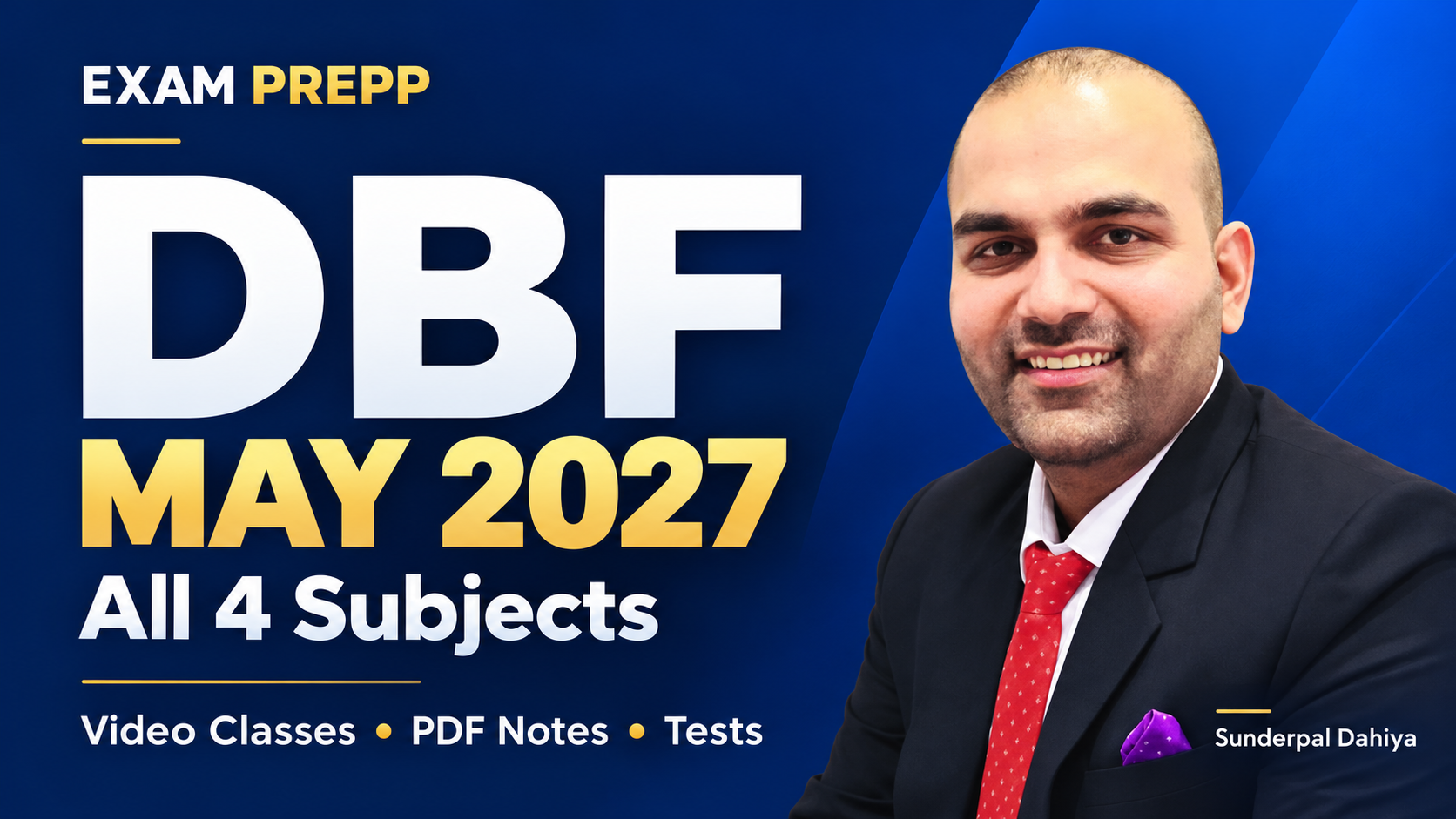
Bring structure to your preparation with the DBF May 2027 course on the Exam Prepp app. Explore support for all four papers through recorded classes, PDFs, quizzes, chapter-wise MCQs, test series and mentorship, with live doubt sessions when required. Check the current listing for fees, schedule, access and inclusions; coaching enrolment is separate from IIBF examination registration.
 Explore Courses on the AppAsk on WhatsAppJoin the DBF Telegram Group
Why Choose Exam Prepp for Structured Preparation?
- Concept explanations followed by questions and revision.
- Chapter-wise practice to identify weak areas rather than only watch classes.
- Personal mentorship through direct call or WhatsApp message and discussion support.
- A study routine adapted to your graduation, work or recruitment commitments.
About Mentor & Author: Sunderpal Dahiya Sir
Sunderpal Dahiya Sir has more than 10 years of teaching experience. Use mentorship to clarify difficult concepts, review errors and plan realistic preparation. For course guidance, call or WhatsApp 8800528912.
Teaching note: Study content is in English, with explanations in Hinglish to support understanding. संकल्पना समझें, अपने शब्दों में समझाएँ और प्रश्नों का अभ्यास करें।
Follow the Exam Prepp YouTube channel for learning updates.
Related Reading for Your Next Step
- Want a Banking Career? Use DBF to Build a Role-Based Preparation Plan
- DBF for Private Bank and NBFC Jobs: A Role-Specific Application Checklist
- Banking Interview Anxiety: Use DBF Concepts in a 21-Day Speaking Plan
- DBF Exam and Preparation Guide
- DBF Theory and Practical Insights
References and learning note · checked 9 October 2026: IIBF DBF rules and syllabus; IIBF examination information. Consult the applicable official rules for eligibility and registration. Study plans, comparisons and fictional exercises in this article are educational guidance rather than official syllabus-overlap percentages or guaranteed outcomes.