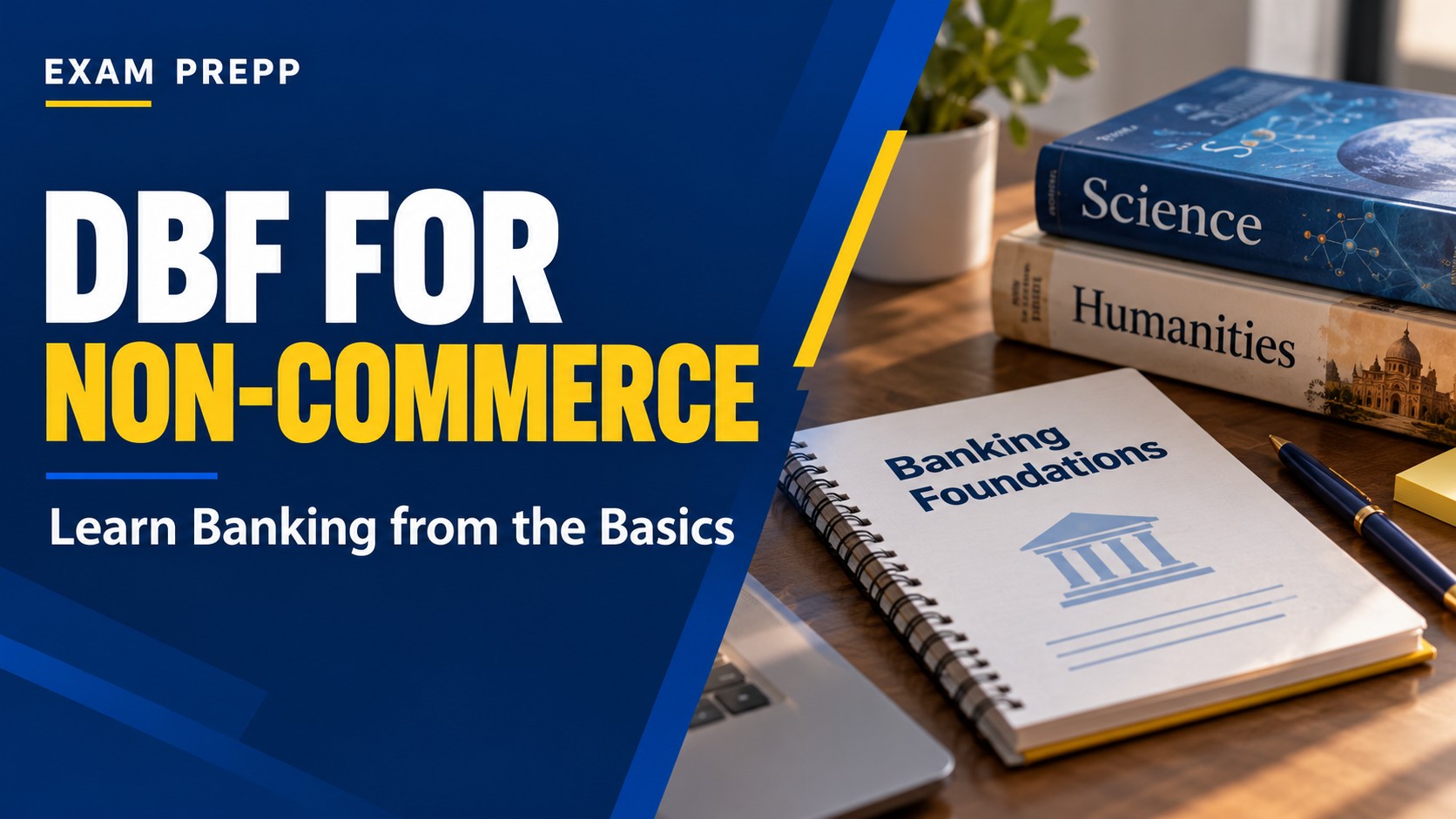
If you come from arts, science, engineering or another non-commerce stream and want to enter banking, DBF is a useful option to explore for your next step.
DBF can provide the structured introduction you need to banking and finance. You can build unfamiliar accounting and financial concepts step by step while using the reasoning, writing or analytical habits developed in your original discipline.
How DBF Can Help You
- Bridge the subject gap: begin with vocabulary, classifications and manageable calculations.
- Add banking focus to your degree: develop sector-specific knowledge alongside your existing academic strengths.
- Prepare better career explanations: show how your background and new learning connect to your banking goal.
What This Can Add to Your Career
Your original stream can remain a strength while DBF helps you develop a new professional focus. The four-week bridge plan below shows how to begin without assuming prior commerce knowledge. Eligibility for each job still follows the relevant recruitment rules.
Build your banking foundation from the basics with Exam Prepp
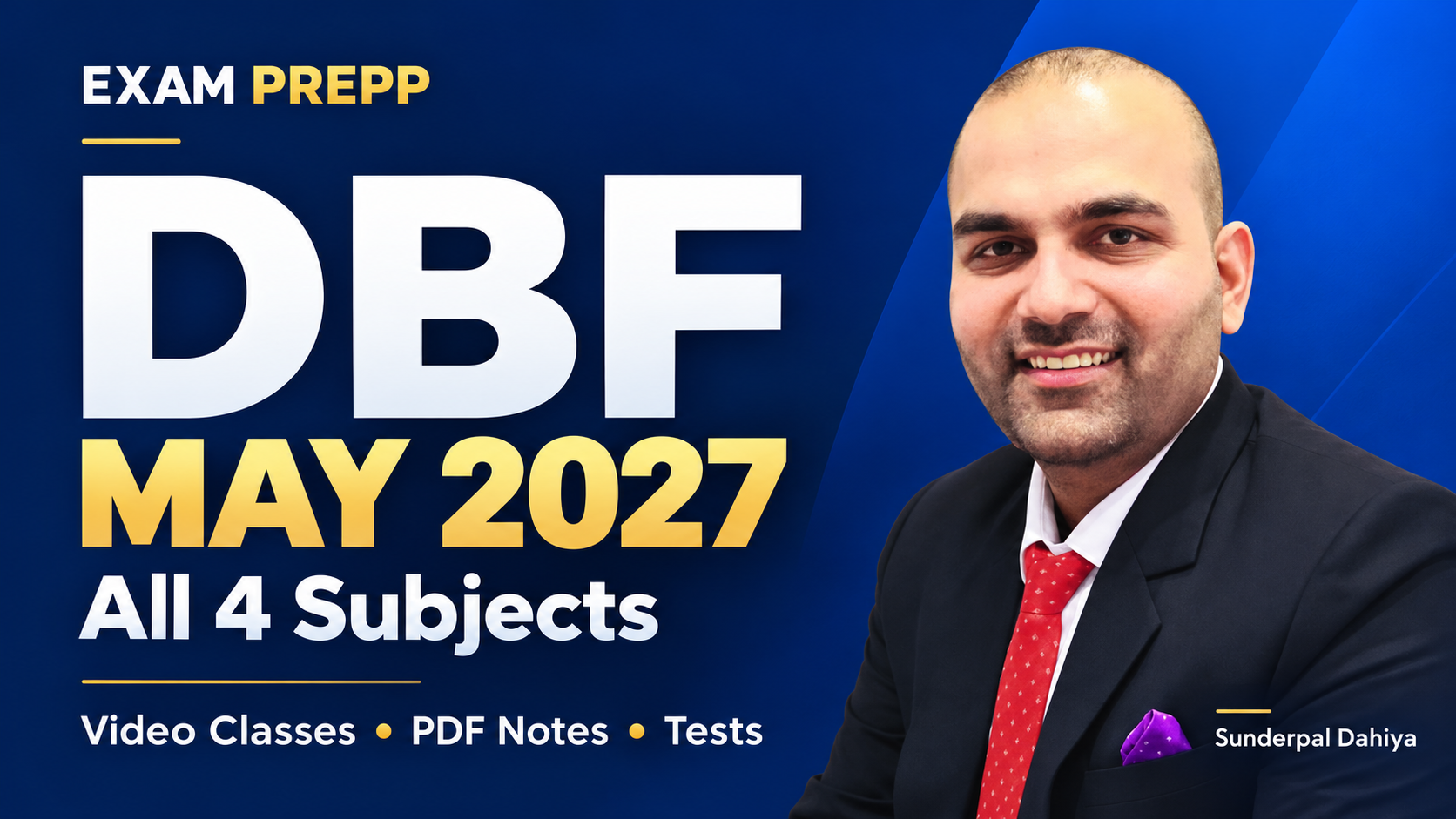
Take the next step with the DBF May 2027 course on the Exam Prepp app. Use structured classes, subject practice, revision and mentorship to turn your interest into a preparation routine. Explore the current course details and choose the support that fits your goal.
For personal guidance, contact Sunderpal Dahiya Sir through direct call or WhatsApp. Share your background and target so the discussion can focus on your study needs.
In This Article
- How this qualification can help you
- What this adds to your career
- Map Your Starting Strengths and Gaps
- Week 1: Build a Small, Usable Glossary
- Week 2: Learn Classifications through a Familiar Case
- Week 3: Practise Calculations and Explanations Together
- Week 4: Enter the Full Study Sequence with a Review Habit
- Make Your Background an Interview Strength
- Frequently Asked Questions
Map Your Starting Strengths and Gaps
| Background habit | How to use it | New foundation to build |
|---|---|---|
| Scientific observation | Check facts and assumptions in an example | Banking and financial vocabulary |
| Engineering or numerical problem-solving | Work through calculations step by step | Accounting classifications and interpretation |
| Humanities writing | Explain institutions and concepts clearly | Numerical practice and financial terminology |
| Other practical or professional study | Use familiar tasks to create examples | A systematic banking subject map |
These are possible connections, not stereotypes. Assess your own skills rather than assuming every science student is strong at calculations or every humanities student writes easily.
Week 1: Build a Small, Usable Glossary
- Choose a few terms each session from material you are studying.
- Write a simple meaning in your own words.
- Add a fictional example.
- Identify a similar term that could cause confusion.
- Explain the difference aloud.
Start with ideas such as an asset, a liability, income, an expense, cash and an amount receivable. A glossary is useful only when it supports understanding; do not collect hundreds of copied definitions before attempting questions.
Week 2: Learn Classifications through a Familiar Case
An original beginner case
A fictional student club holds ₹8,000 in cash, owns equipment and owes ₹2,000 to a supplier. The cash and equipment represent resources; the amount owed represents an obligation. Discuss why paying the supplier changes cash and the outstanding obligation.
Keep the example simple and state its limits. Its purpose is to make a distinction understandable, not to produce a complete financial statement. Add complexity only when the basic classification is clear.
Week 3: Practise Calculations and Explanations Together
Solve a basic percentage or interest example, then explain the inputs, units and assumptions. If a rate is stated annually, identify the time period used. Use the relevant formula only after understanding what the question asks.
| Error you notice | Useful correction |
|---|---|
| You copied a formula but cannot explain it | Define each input before solving |
| The arithmetic is right but the interpretation is wrong | Write a one-sentence conclusion |
| You confuse cash with income | Use a receipt-and-receivable example |
| You rely on translated keywords alone | Learn the English term used in the material and explain its meaning |
Use teaching explanations to clarify language, then practise the terminology in which the assessment and material are presented.
Week 4: Enter the Full Study Sequence with a Review Habit
- Review the official DBF syllabus and recommended material.
- Choose an organised lesson sequence rather than random videos.
- Reserve extra time for accounting areas that are new to you.
- Maintain a short error log with reasons and corrections.
- Ask a specific question when a concept remains unclear.
DBF’s Class 12 eligibility route is not restricted to commerce, but membership and employment conditions still apply. Do not confuse being academically able to study the subject with being eligible for every banking recruitment examination.
Make Your Background an Interview Strength
If asked why you moved toward banking, connect your original discipline to genuine interests and study actions. For example, describe how you used analytical habits to check a fictional financial exercise, or clear writing to explain an institution.
Avoid claiming that DBF makes your original degree irrelevant. Exam Prepp classes and mentorship can help you build the new foundation while you retain and develop the strengths of your earlier education.
Frequently Asked Questions
Is commerce compulsory for the Class 12 DBF route?
No. The route allows any discipline, subject to the other IIBF conditions.
Do I need accounting knowledge before starting?
You can build the basics, but allow extra time and use a structured sequence.
Should I skip numerical topics because I am from arts?
No. Begin with manageable exercises and review both arithmetic and interpretation.
Can engineering students avoid concept explanations?
No. Calculation skills and clear conceptual understanding need to work together.
What should I ask in a doubt session?
Show the exact term, step or example you cannot explain, rather than saying the whole subject is difficult.
Prepare for DBF May 2027 with Exam Prepp
Bring structure to your preparation with the DBF May 2027 course on the Exam Prepp app. Explore support for all four papers through recorded classes, PDFs, quizzes, chapter-wise MCQs, test series and mentorship, with live doubt sessions when required. Check the current listing for fees, schedule, access and inclusions; coaching enrolment is separate from IIBF examination registration.
 Explore Courses on the AppAsk on WhatsAppJoin the DBF Telegram Group
Why Choose Exam Prepp for Structured Preparation?
- Concept explanations followed by questions and revision.
- Chapter-wise practice to identify weak areas rather than only watch classes.
- Personal mentorship through direct call or WhatsApp message and discussion support.
- A study routine adapted to your graduation, work or recruitment commitments.
About Mentor & Author: Sunderpal Dahiya Sir
Sunderpal Dahiya Sir has more than 10 years of teaching experience. Use mentorship to clarify difficult concepts, review errors and plan realistic preparation. For course guidance, call or WhatsApp 8800528912.
Teaching note: Study content is in English, with explanations in Hinglish to support understanding. संकल्पना समझें, अपने शब्दों में समझाएँ और प्रश्नों का अभ्यास करें।
Follow the Exam Prepp YouTube channel for learning updates.
Related Reading for Your Next Step
- DBF After 12th: A 30-Day Starter Plan Before You Commit
- DBF for College Students and Graduates: Choose the Right Study Load
- Build Banking and Finance Skills with DBF: A Six-Task Learning Portfolio
- DBF Exam and Preparation Guide
References and learning note · checked 9 October 2026: IIBF DBF rules and syllabus; IIBF examination information. Consult the applicable official rules for eligibility and registration. Study plans, comparisons and fictional exercises in this article are educational guidance rather than official syllabus-overlap percentages or guaranteed outcomes.